Even with COVID-19 forcing our Thanksgiving to be smaller, a lot of us will still be preparing a lot of traditional Thanksgiving foods. Take a look at these safety preparedness items for the upcoming Thanksgiving Holiday. Make sure to keep yourself and your family safe!
- Stay in the kitchen when you are cooking so that you can keep an eye on the food. Unattended cooking is the leading factor in home cooking fires. Keep an eye on your items while they are cooking so that you can be prepared for the unexpected.
- Keep an eye on what you fry! Most cooking fires start when frying food.
- Move things that can burn away from the stove. This includes dishtowels, bags, boxes, paper and curtains.
- Turn pot handles toward the back of the stove so no one can bump them or pull them over.
- In case of an oven fire, turn off the oven and keep the door closed until it’s cool.
- Be a safe cook and wear short sleeves or roll them up so they don’t catch on fire.
Tiny Turkey Safety
- Be sure electric cords from an electric knife, coffee maker, plate warmer or mixer are not dangling off the counter within easy reach of a child.
- Keep matches and utility lighters out of the reach of children — up high in a locked cabinet.
- Keep children away from the stove. The stove will be hot and kids should stay three feet away.
- Never leave children alone in room with a lit candle.
- Make sure kids stay away from hot food and liquids. The steam or splash from vegetables, gravy or coffee could cause serious burns.
Let’s Talk Turkey (All things cooking and baking)
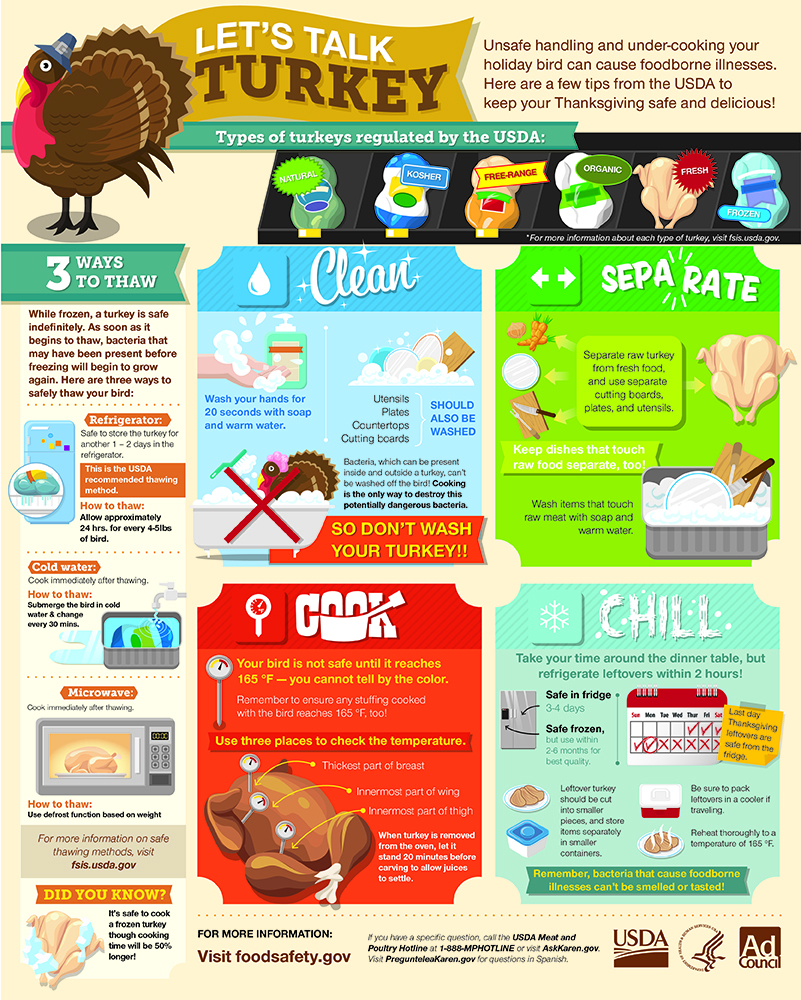
LET’S TALK TURKEY
Unsafe handling and under-cooking your holiday bird can cause foodborne illnesses. Here are a few tips from the USDA to keep your Thanksgiving safe and delicious!
Types of turkeys regulated by the USDA:
- NATURAL
- KOSHER
- FREE-RANGE
- ORGANIC
- FRESH
- FROZEN
3 Ways to Thaw
While frozen, a turkey is safe indefinitely. As soon as it begins to thaw, bacteria that may have been present before freezing will begin to grow again. Here are three ways to safely thaw your bird:
Refrigerator:
Safe to store the turkey for another 1-2 days in the refrigerator.
This is the USDA recommended thawing method.
How to thaw:
- Allow approximately 24 hrs. for every 4-5lbs of bird.
Cold water:
Cook immediately after thawing.
How to thaw:
- Submerge the bird in cold water and change every 30 mins.
Microwave
Cook immediately after thawing.
How to thaw:
- Use defrost function based on weight
More information on safe thawing methods.
Did you know?
It’s safe to cook a frozen turkey though cooking time will be 50% longer!
Clean
Wash your hands for 20 seconds with soap and warm water.
The following should also be washed:
- Utensils
- Plates
- Countertops
- Cutting boards
Bacteria, which can be present inside and outside a turkey, can’t be washed off the bird! Cooking is the only way to destroy this potentially dangerous bacteria.
SO DON’T WASH YOUR TURKEY!!
Cook
Your bird is not safe until it reaches 165 °F; you cannot tell by the color.
Remember to ensure any stuffing cooked with the bird reaches 165 °F, too!
Use three places to check the temperature:
- Thickest part of breast
- Innermost part of wing
- Innermost part of thigh
When turkey is removed from the oven, let it stand 20 minutes before carving to allow juices to settle.
Separate
- Separate raw turkey from fresh food, and use separate cutting boards, plates, and utensils.
- Keep dishes that touch raw food separate, tool
- Wash items that touch raw meat with soap and warm water.
Chill
- Take your time around the dinner table, but refrigerate leftovers within 2 hours!
- Safe in fridge 3-4 days
- Safe frozen, but use within 2-6 months for bent quality.
- Monday is the last day Thanksgiving leftovers are safe from the fridge.
- Leftover turkey should be cut into smaller pieces, and store items separately in smaller containers.
- Be sure to pack leftovers in a cooler it traveling.
- Reheat thoroughly to a temperature of 185 °F.
Remember, bacteria that cause foodborne illnesses can’t be smelled or tasted!
If you have a specific question, call the USDA Meat and Poultry Hotline at 1-888-MPHOTLINE or visit ask usda (formerly Ask Karen). Visit PregunteleaKaren for questions in Spanish.
USDA
Ad
Council